# cPanel
# How to Set Up Email on iPhone and iPad
#### LOG IN TO THE CPANEL INTERFACE AND CREATE THE MAILBOX YOU WANT TO SET UP
1. Use your device to log in to the cPanel interface.
2. Create a mailbox! ([How to create E-mailbox is cPanel?](https://dotroll.com/en/knowledge-base/books/e-mail/page/how-to-create-an-email-account-in-cpanel "How to create E-mailbox is cPanel?"))
1. After you have created the mailbox in the cPanel interface, scroll down to the Email accounts section in the Mailbox under Email accounts and click on Connect Tools.

Connect Devices
2. Tap the IMAP SSL/TLS link to download the profile with configuration settings.

IMAP over SSL/TLS
3. The interface will display the following message, approve it:
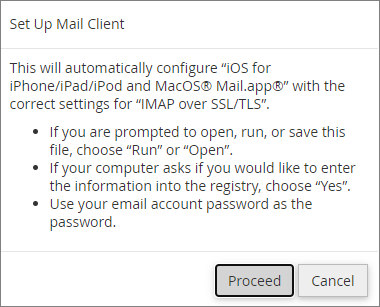
Set Up Mail Client
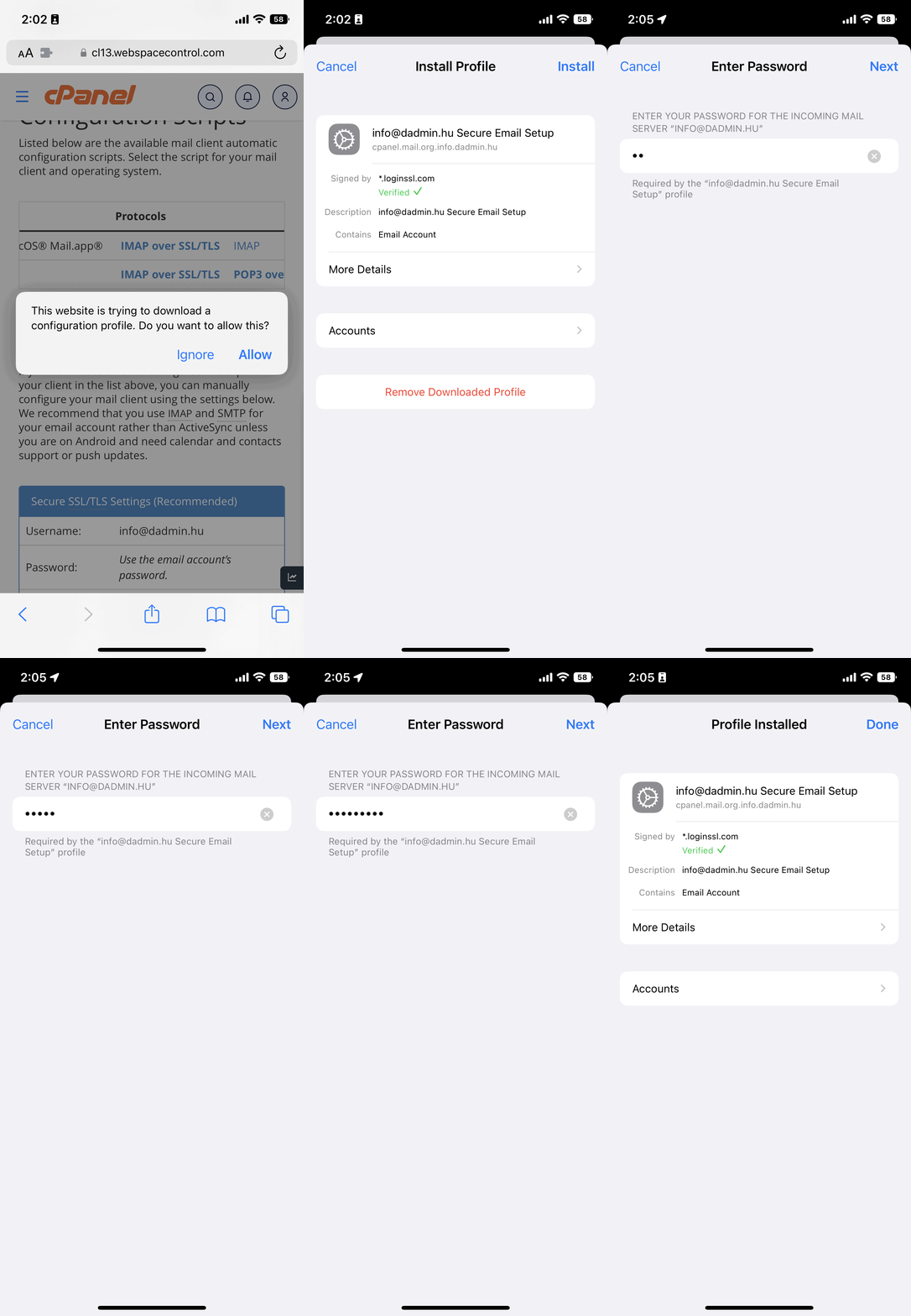
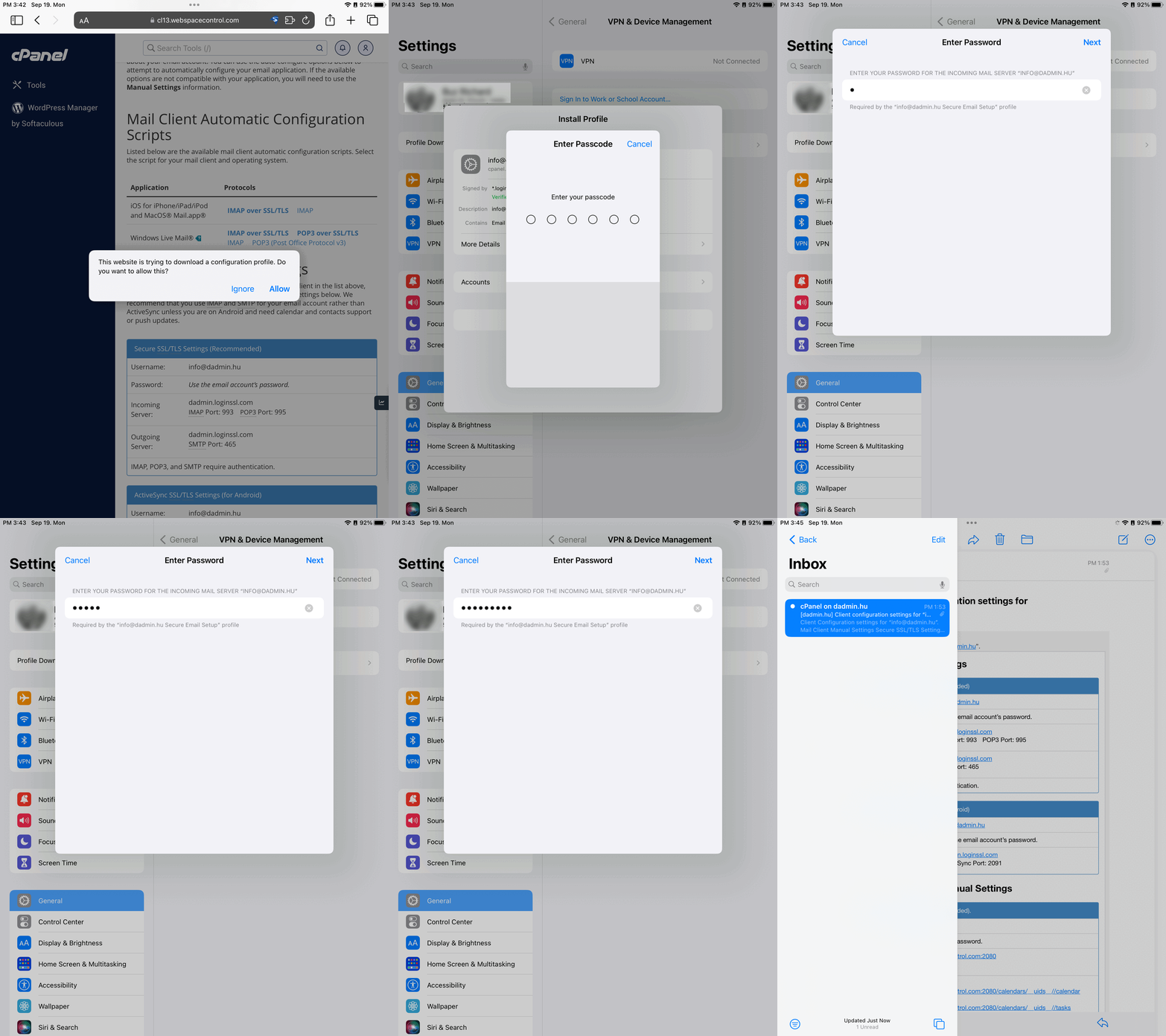
- Approve the warning message that appears to download the profile to your device.
- Navigate to the **Settings** menu, where you tap **Profile downloaded** under your Apple profile.
- The device will then load the data in the saved configuration file and display it, tap **Install** here.
- Then tap the **Install** button at the bottom.
- Enter the password for the mailbox you want to set up, then tap **Next** in the top right corner.
- Finally, tap **Done**.
PuTTY login
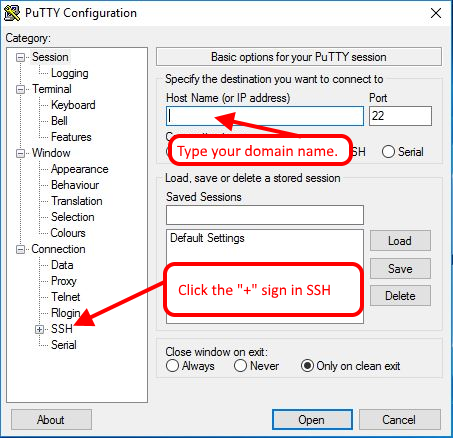
In Host Name (or IP address), enter the name of your main domain. Port is the default port 22.
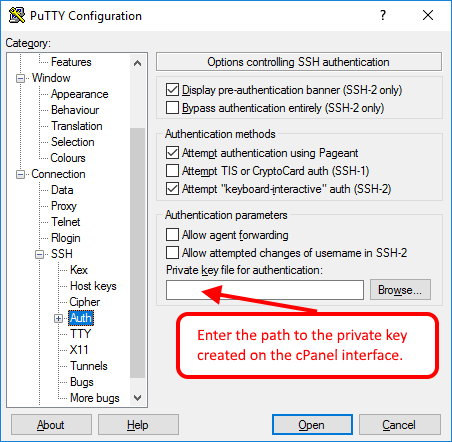
Next, click the “+” sign next to SSH.
PuTTY login
In the Private key file for authentication box, enter the key for the cPanel interface or the private key that you created earlier.
You can then save the configuration, but you can also connect to your storage immediately.
- #### CREATING SVN DIRECTORY
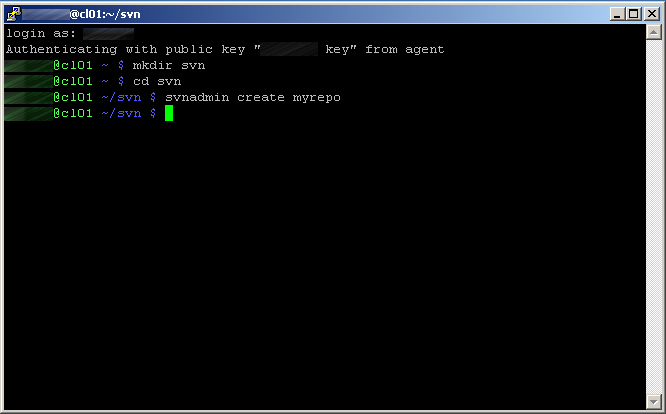
The directory and the repository itself must be created through SSH:
```
cd wwwroot
mkdir svn
cd svn
svnadmin create reponeve
```
Create SVN repo
- #### SETUP TORTOISESVN
In TortoiseSVN, only the name of the program required for the connection is required.
TortoiseSVN Settings
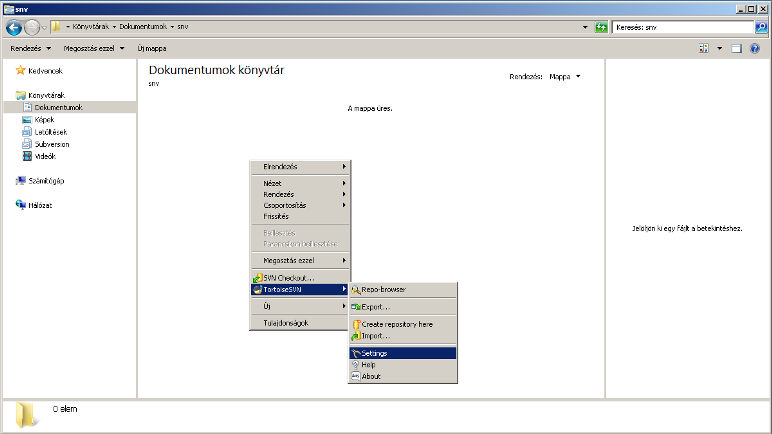
Click the right mouse button in the folder, and select **Tortoise SVN/Network** menu
TortoiseSVN Settings
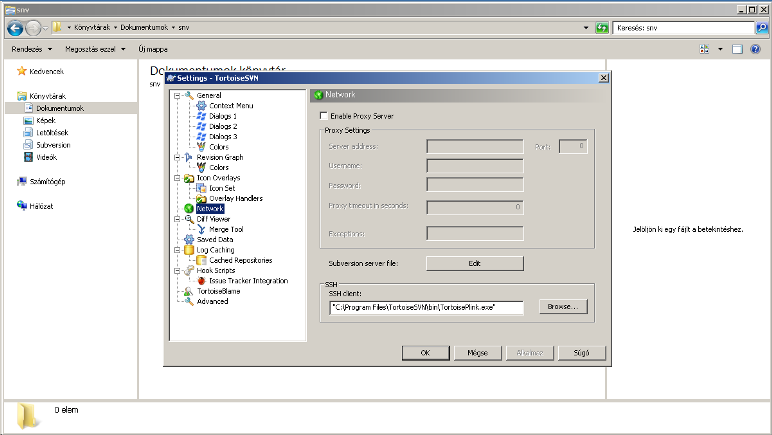
Click the **Browse** button for **SSH client**, then enter the path for the folloving line: ```
C:\Program Files\TortoiseSVN\bin\TortoisePlink.exe
```
Next click Ok.
- #### CHECKOUT
To set up the repository, click the right mouse button, then select SVN Checkout… menu
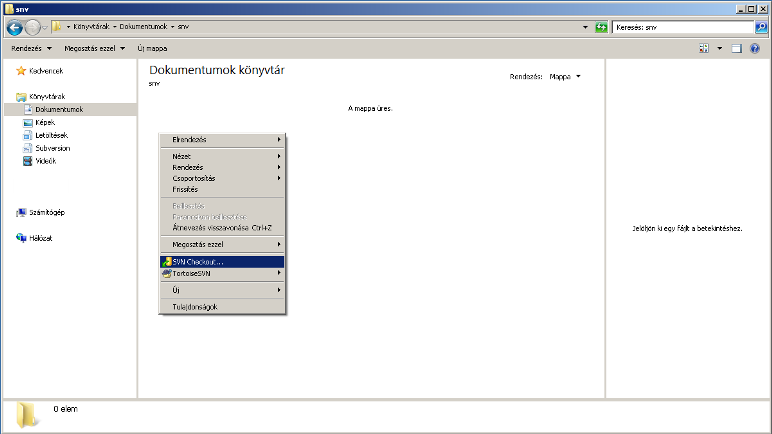
Checkout
To use SVN, you must specify the repository URL as follows: ```
svn+ssh://az_on_fodomain_neve/home/tarhelyazonosito/path/to/svn/repo
```
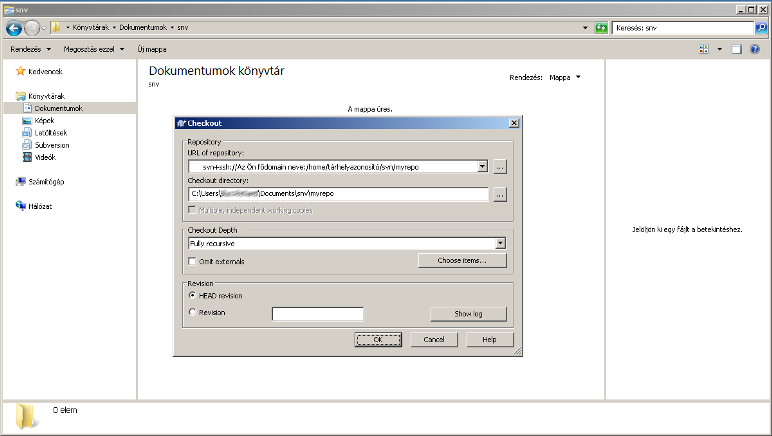
SVN repository URL
# How to Install and Run Python Django in cPanel
[Django](https://www.djangoproject.com/ "Django") is a Python-based framework that allows you to create websites quickly and easily. Use this description to set up the Django framework. After setup, you will get a working Django page that allows you to:
- Load static pages with a specific domain name
- Loading the Django administration interface
- SQLite database usage
1. Log in to your cPanel account
2. Find the **Python application setup** menu item and click on it
3. Setting up a Python application
1. On the page that appears, click **Create Application**
1. For **Python version**, select version **3.8.1**.
2. Enter the application directory **(Application root /home/cpanel\_username/**), for example: application
3. In the **Application URL** section, select the domain name and leave the following field blank.
4. Also leave the **Application launch file** and **Application entry point** fields blank.
In this case, cPanel will automatically create the *passenger\_wsgi.py* file and the default interpreted boot environment.
1. 1. 5. In the field after **Passenger log file**, you can enter the name of the log file that can help you troubleshoot.
6. Then click the **Create** button in the upper right corner. cPanel then creates the Python application and sets the environment variables.
7. Copy the command after **Enter to the virtual environment. To enter to virtual environment, run the command:** at the top of the page, as you will need this command to configure the application.
- Installing Django
- Create and configure the Django project
- Configure the Passenger for use with Django
1. Log in to your webspacee via SSH or launch the **Terminal** menu item available from the cPanel interface.
2. Activate the virtual environment by pasting and running the previously copied command, for example: ```
source /home/cpanel_username/virtualenv/application/3.8/bin/activate && cd /home/cpanel_username/application
```
The command line now begins with (**application: 3.8**), indicating that the application is working in a virtual environment with Python 3.8. All of the following commands in this article assume that you are working in a Python virtual environment. If you log out of the SSH session (or deactivate the virtual environment with the **deactivate** command), make sure that you have reactivated the virtual environment before performing any of the following steps.
3. To install Django, issue the following commands: ```
cd ~
pip install django==2.1.8
```
To verify the Django installation, issue the following command:
```
django-admin --version
```
4. Create the Django project by issuing the following command: ```
django-admin startproject application ~/application
```
5. Create static project directories by issuing the following commands: ```
mkdir -p ~/application/templates/static_pages
mkdir ~/application/static_files
mkdir ~/application/static_media
```
6. Using a text editor, open the ***~/application/application/settings.py*** file and make the following changes to the file:
- Find the **ALLOWED\_HOSTS** line item and make changes as follows. Replace *example.com* with your own domain name: ```
ALLOWED_HOSTS = ['example.com']
```
- Locate the **TEMPLATES** block and modify it as follows: ```
TEMPLATES = [
{
'BACKEND': 'django.template.backends.django.DjangoTemplates',
'DIRS': [os.path.join(BASE_DIR,'templates')],
'APP_DIRS': True,
'OPTIONS': {
'context_processors': [
'django.template.context_processors.debug',
'django.template.context_processors.request',
'django.contrib.auth.context_processors.auth',
'django.contrib.messages.context_processors.messages',
],
},
},
]
```
- Find the line **STATIC\_URL** and add the following lines: ```
STATIC_URL = '/static/'
STATIC_ROOT = os.path.join(BASE_DIR, 'static_files')
MEDIA_URL = '/media/'
MEDIA_ROOT = os.path.join(BASE_DIR, "static_media")
```
7. Using a text editor, open the ***~/application/application/urls.py*** file, then delete the entire contents and paste the following contents: ```
from django.contrib import admin
from django.urls import path, include
from django.conf import settings
from django.conf.urls.static import static
from django.conf.urls import url
from django.views.generic.base import TemplateView
urlpatterns = [
path('admin/', admin.site.urls),
url(r'^$', TemplateView.as_view(template_name='static_pages/index.html'), name='home'),
] + static(settings.MEDIA_URL, document_root=settings.MEDIA_ROOT)
urlpatterns += static(settings.STATIC_URL, document_root=settings.STATIC_ROOT)
```
8. Using a text editor, open the file ***~/application/passenger\_wsgi.py*** then delete the entire contents and paste the following contents: ```
import os
import sys
import django.core.handlers.wsgi
from django.core.wsgi import get_wsgi_application
# Set up paths and environment variables
sys.path.append(os.getcwd())
os.environ['DJANGO_SETTINGS_MODULE'] = 'alkalmazas.settings'
# Set script name for the PATH_INFO fix below
SCRIPT_NAME = os.getcwd()
class PassengerPathInfoFix(object):
"""
Sets PATH_INFO from REQUEST_URI because Passenger doesn't provide it.
"""
def __init__(self, app):
self.app = app
def __call__(self, environ, start_response):
from urllib.parse import unquote
environ['SCRIPT_NAME'] = SCRIPT_NAME
request_uri = unquote(environ['REQUEST_URI'])
script_name = unquote(environ.get('SCRIPT_NAME', ''))
offset = request_uri.startswith(script_name) and len(environ['SCRIPT_NAME']) or 0
environ['PATH_INFO'] = request_uri[offset:].split('?', 1)[0]
return self.app(environ, start_response)
# Set the application
application = get_wsgi_application()
application = PassengerPathInfoFix(application)
```
9. Then create the default index.html file within the ***~/application/templates/static\_pages*** directory. this file is a default static file that displays only the text **Hello World**.
10. Issue the following command: ```
python ~/application/manage.py migrate
```
11. Create the administrator user using the following command: To do this, first issue the following command: ```
python ~/application/manage.py createsuperuser
```
When prompted for the **Username**, type the new user name and press enter.
When prompted for an **email address**, type the email address and press enter.
When prompted for the administrator password, type the new **password**, and then press enter:
12. You can compile static content by issuing the following command: ```
python ~/application/manage.py collectstatic
```
When prompted to overwrite existing files, type **yes** and then press enter.
13. Restart Python in the cPanel interface.
- To do this, find and click **Python Setup** in the cPanel
- On the **Web Applications** tab, locate the application, and then click **Restart Application** in the **Actions** column.
14. The last step is to test the application via the set URL:
- In a browser, open the website (http://www.example.com/) where the index.html file should appear. It is important to replace the domain name example.com with the domain name you are using.
- The next step is to open the address http://www.example.com/admin/ where the administration interface of the Django application should appear. It is important to replace the domain name example.com with the domain name you are using.
In case the desired content does not appear in the browser, try running the application from the command line using the following command:
```
python ~/application/passenger_wsgi.py
```
In this case, the console will display the cause of the error. If you specified the logging path when setting up Python, errors are also recorded in the log file.
### MORE INFORMATION
Since the current application is already running, you can actually start developing your own application, for which you can find further help at the following links:
- The official documentation for Django is available at: [http://docs.djangoproject.com](https://docs.djangoproject.com/).
- For Django extensions, visit [https://github.com/django-extensions/django-extensions](https://github.com/django-extensions/django-extensions).
- The *south* library is a popular add-on to database migrations that you can learn more about at [https://pypi.python.org/pypi/South](https://pypi.python.org/pypi/South).
- The *fabric* library helps simplify application development, more detailed information can be found here [http://docs.fabfile.org](http://docs.fabfile.org/).

Advanced / Apache Handlers
On the page that appears, add the following extension in the **Create an Apache Handler** section:
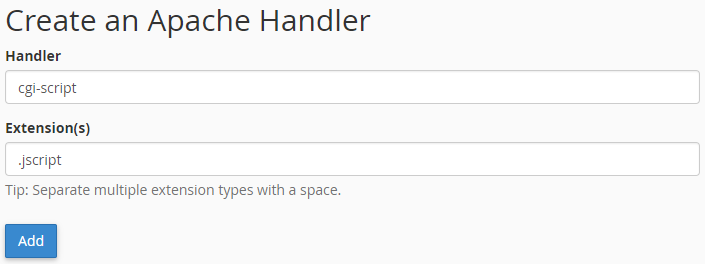
Create an Apache Handler
**Handler:** cgi-script
**Extension(s):** .jscript
Click the Add button.
You can test your storage settings by creating the following popup file. Make a file with the text editor (for example, Notepad ++) with the following content:
```
#!/bin/env node
console.log("Content-Type: text/html;charset=UTF-8\n");
console.log("Hello World!");
```
Save the file as a test.jscript file under UNIX standard lineup (LF), then upload it to your storage. After uploading, the file must be set to 755 or rwxr-xr-x. You can modify the privilege using the FTP client program. Then, in the browser, call the prepared page ([http://yourdomainname.tld/test.jscript](http://yourdomainname.tld/test.jscript)) here in Hello World! must be inscribed.
#### SET UP ALTERNATIVE CGI MODE
After making the settings in this description, the .js files from the browser will be run by the **cgi-bin/cgi-node** program. To use CGI-Node.js, download the latest release from [http://www.cgi-node.org/downloads](http://www.cgi-node.org/downloads).
They suggest that you download the cgi-node.min.js file, as this web site provides faster service. Rename the downloaded file to **cgi-node**, open with a text editor and replace the first line with:
```
#!/bin/env node
```
Next, find the **SessionPath** variable in the file. Set a variable as a directory that can not be accessed through a browser. For example: /home/YOUR\_CPANEL\_USER\_NAME/tmp/cgi-node-session. Then save the file and then upload it to your **cgi-bin** folder. Also set a 755 privilege for the file.
**If you specify a non-existent directory in the file, you will create it on your storage after uploading it.**
Next, create a **.htaccess** file in the root directory of the web site with the following content.
```
Action cgi-node /cgi-bin/cgi-node
AddHandler cgi-node .js
```
To test your settings, you need to create a file with a text editor in your site’s root directory. The file contains the following content:
```
CgiNodeInfo();
```
For example, save the created file, for example, as body.jscript, then call the page (http://yourdomainanme.tld/test.jscript). Your browser will display a spreadsheet that will show the variables in the run environment.
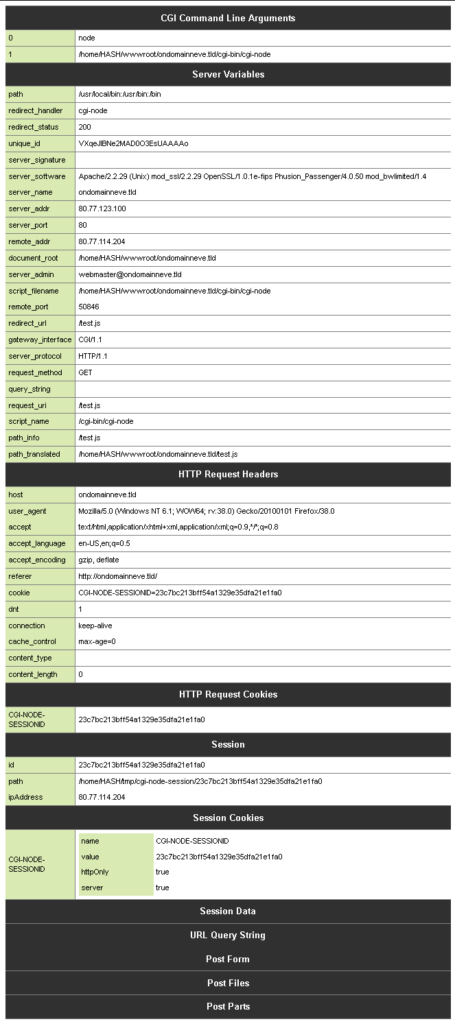
Node.JS test page
# Common Issues After a MySQL Server Upgrade and How to Fix Them
If you encounter an error message similar to the following during the operation that you want to perform on the MySQL server:
```
Field 'field_name' doesn't have a default value
```
Then we recommend that you run the following query after building a MySQL connection:
**Up to PHP version 5.7 you should use the following code:**
```
mysql_query("SET SESSION sql_mode = ''");
```
**From PHP version 7.0 or higher, you should use the following line of code:**
```
mysqli_query("SET SESSION sql_mode = ''");
```
# How to Add Addon and Parked Domains in cPanel
For paid web hosting services, you have the option to add additional domain names beyond your domain name to your storage. You can also check the number of additional domain names that you specify in each hosting package on the page below: [Storage Services](https://dotroll.com/en/services/hosting/?swcfpc=1).
#### WHAT IS THE ADDITIONAL DOMAIN NAME?
For cPanel storage, a main domain name that is assigned to the public\_html folder is set at the time of ordering.
If you have more than one registered domain name (even with other registrars), you can switch to cPaneles hosting.
#### WHAT IS ALIAS?
You can set the domain name alias as unlimited to any cPaneles hosting package. If a domain name is used for aliases, it will display the same content as the main domain name in the browser after it is set up. The alias that are added to the cPanel interface can only be assigned to the public\_html folder. If you add a domain name as alias to your storage, you will also need to migrate the name servers to cPaneles named names for correct operation.
#### IN WHICH CASE CAN I NOT ADD A DOMAIN NAME TO AN ADDITIONAL DOMAIN NAME OR ALIAS?
If you can not connect to storage if the domain name has been previously added to another hosting as an Additional Domain Name or alias. In this case, the domain name must first be separated from the other storage.
#### PRE REQUIREMENTS FOR THE ADDON DOMAINS:
Prior to setup, we recommend that you check the cPanel interface number for the currently added and add-in Additional Domain Names. This can be viewed on the cPanel interface in the left column of stats in the Additional Domains line. If you are using the add-on domains that you can add, you can switch to a hosting package here.
**Add an additional domain name to the cPanel interface**
In cPanel, in the Domains box, select Additional Domains.
Here, you’ll need to provide the following information:

**Add an Alias domain name to the cPanel interface**
In cPanel, in the Domains box, select the Alias menu.
The following data must be provided:

Finally, click Add Domain. You can convert the accented domain names on the page below: [Convert an accent domain name](https://www.verisign.com/en_US/channel-resources/domain-registry-products/idn/idn-conversion-tool/index.xhtml "Convert an accent domain name")
#### NAME SERVER CHANGE PROCESS
**For a domain name registered with DotRoll:**
If the domain name is registered in the DotRoll system, the name servers of the domain name must be changed on the DotRoll administrative interface after the registration.
To do this, follow these steps:
1. Enter [DotRoll.com](https://admin.dotroll.com/?swcfpc=1) with your username and password.
2. Click **Domains** -> **My Domains**
3. Click the **Active** button for that domain name
4. In the left **Manage box**, click **Nameservers**
5. Check the *Use webhosting nameservers* option
6. Click **Change Nameservers** button of the bottom.
- **Primary Nameserver:** ns1.webspacecontrol.com
- **Secondary Nameserver:** ns2.webspacecontrol.com
# How to Install an SSL Certificate in cPanel
If the certificate was previously installed on storage, you can configure it through the cPaneles interface as follows:
1. Log on to the cPanel interface and find and click on **SSL/TLS** in the **Security** box.
2. On the page that appears, select the **Install and Manage SSL for your site (HTTPS).**
3. Once the page has been loaded, locate the **Install an SSL Website** section and select the **Domain** name under Domain label from the drop-down list and click **Autofill by Domain** button.
4. Then scroll down to the bottom of the page and click the **Install Certificate** button.
- [URL redirect/rewrite using the .htaccess file](https://dotroll.com/en/knowledge-base/books/htaccess/page/how-to-create-url-redirects-and-rewrites-using-htaccess "URL redirect/rewrite using the .htaccess file")
- uses the storage resources
- max 1 database
- max 100 MB database size
- listening unix domain socketen: /tmp/redis.sock
- password protected, password can be viewed/modifiy here: /var/run/redis/redis.pwd
HASH must be replaced by the cPaneles login name.
# What to Do If You Forgot Your cPanel Password
If you forget your storage, you will be able to set up a new password after signing in at [DotRoll.com](https://admin.dotroll.com/?swcfpc=1 "https://admin.dotroll.com")
After logging in, click Services in the top menu bar
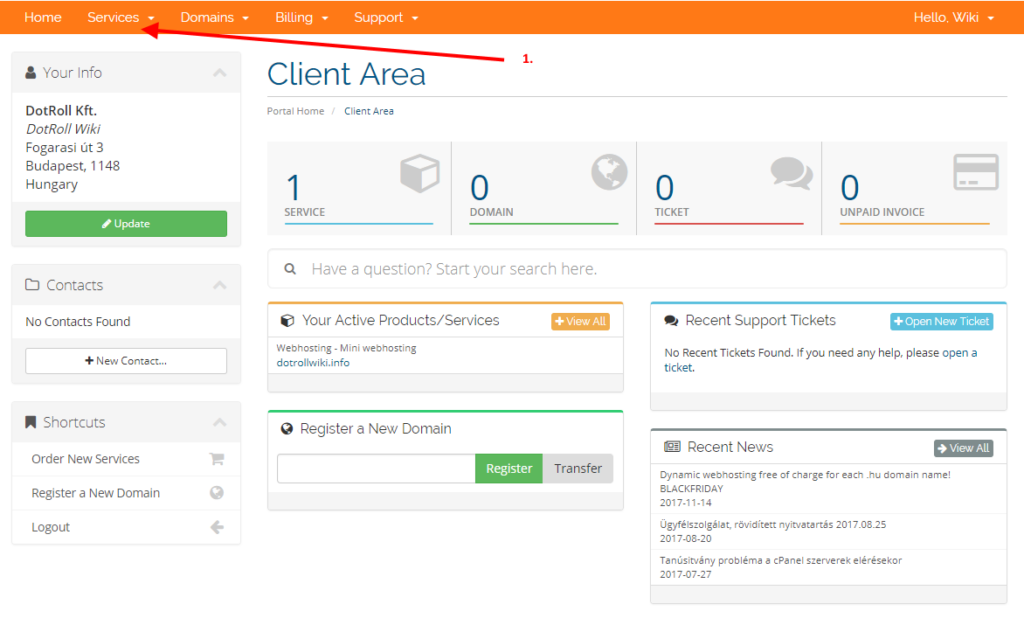
Services menu
then to My Services
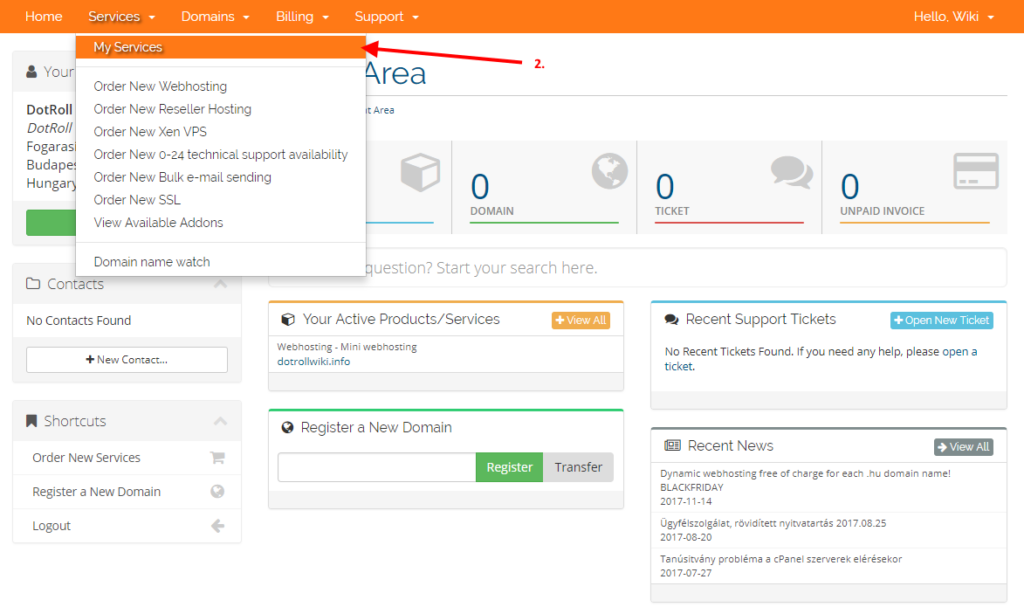
My Services
On the page that appears, click on the Active button in the hosting service line:
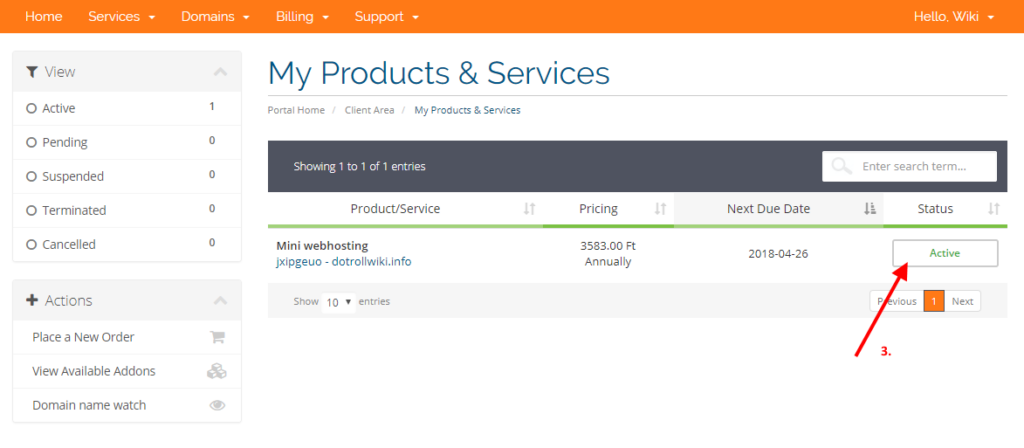
Click Active button
On the left side of the page, click Change Password:
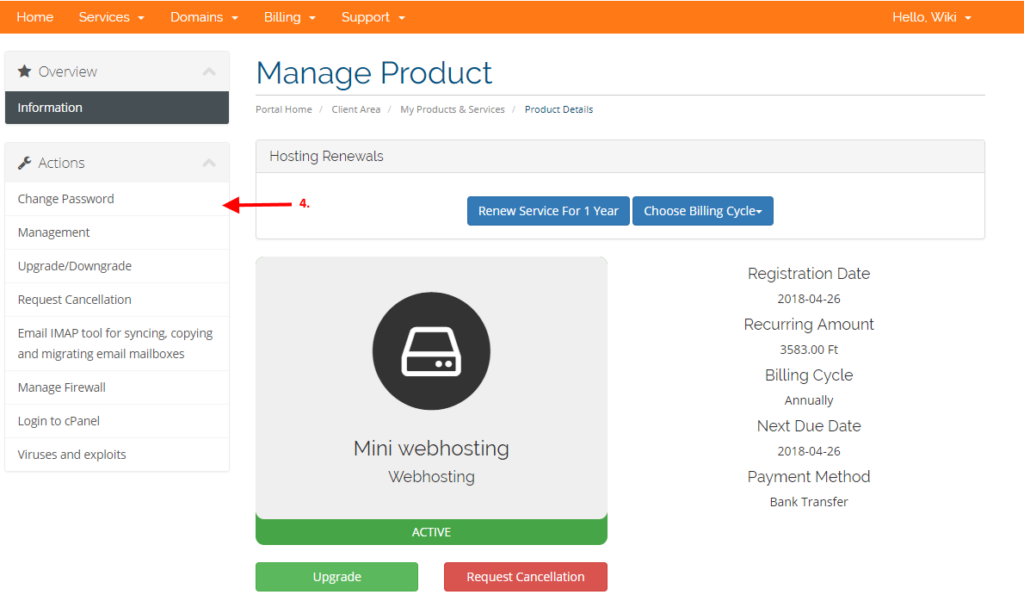
Click Change Password menu
On the page that appears, you can set up a new password.
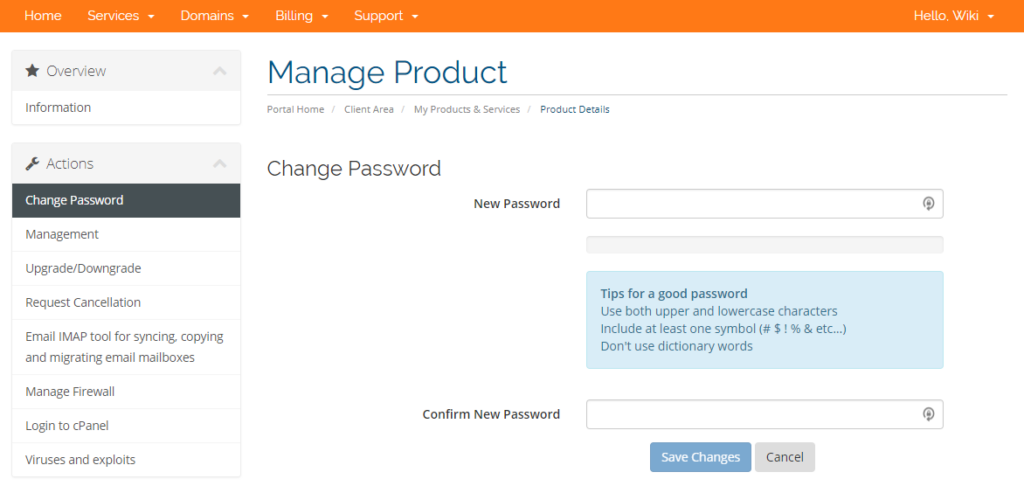
Set new password
After changing the password, only the newly set password can be accessed by the following features:
- cPanel interface
- connecting to the default FTP user (ftp: //cpanel\_username@ftp.yourdomainname.tld)
- the default email account password (cpanel\_username@yourdomainname.tld)
# How to Access AWStats Without Logging Into cPanel
Yes, it is possible to access your AWStats directly through your domain name.
However, doing this requires you to add a script to your site and configure it. In other words you need to manually install AWStats for your domain.
In order to install AWStats on your domain you can follow the steps below:
1. Download Awstats from their website **[here](http://www.awstats.org/#DOWNLOAD "AWStats")**.
2. Extract the contents of the file to your computer.
3. Use an FTP client (or File Manager in cPanel) to upload the contents of both the **cgi-bin** and **icon** folders into the root directory of your domain.
4. Change the permissions of the **awredir.pl** and **awstats.pl** files to 755 (in the cgi-bin directory). You can do that with your FTP client.
5. The next step is to download the AWStats configuration file from your account to your local computer from ***/tmp/awstats/awstats.yourdomain.tld.conf***
6. Open this file with a text editor and go to the “**DirIcons**” line. Change the value to: DirIcons=”**/icon/**“.
7. Upload the modified file to the cgi-bin folder.
Note: Please password protect the /cgi-bin folder so that only authorized users can access it (found under cPanel -> Files -> Directory Privacy).
# How to Create a Database Backup in cPanel
Almost every modern website uses a MySQL database. More popular content management systems, such as WordPress, Magento, Joomla, store all data in a MySQL database. If, for some reason, we want to back up the database, such as a MySQL server update, then it is possible to extract the data stored in the database or to recover the dump in case of a possible error.
#### COMPRESS A FOLDER
After you connect to the server via SSH, you can create a backup by issuing the following command:
```
mysqldump -u user_name -p database_name --single-transaction | gzip -2 > db.sql.gz
```
By issuing the above command, you create a compressed dump with a single transaction token.
Of course, it is also possible to make an uncompressed dump, but it will take a lot more time and more space will be spent on dumped content.
```
mysqldump -u user_name -p database_name > db.sql
```
#### EXTRACT AN ARCHIVE
You can do this by issuing the following command
```
gunzip < db.sql.gz | mysql -u user_name -p database_name
```
To restore an uncompressed database, use the following command:
```
mysql -u user_name -p database_name < db.sql
```
# How to Generate and Configure SSH Keys
The common way to connect to the server via SSH is to use a username and a password. But to increase security, you can use a pair of keys(a private one and a public one) to connect to the server.
The public key will be on the server. The private key will be on your computer. When you are trying to connect, the server compares the two keys. If they are the right ones, you will be able to access it.
We will show in this post how to generate the pair of keys and connect to your server with PuTTY.
To generate and use public and private keys in cPanel:
1. Log in to **cPanel s**croll down to the **SECURITY** section -> **SSH Acces**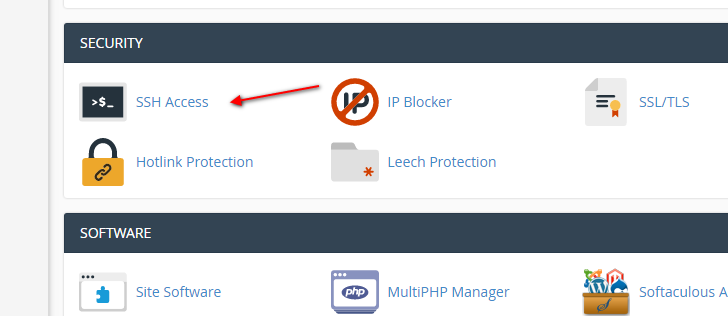
SSH Access
2. Click the **Manage SSH Keys** button 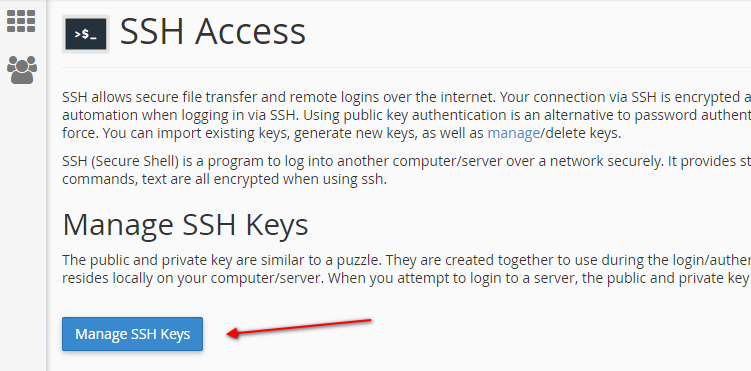
Manage SSH Keys
3. On the next page, you can create a new key or import an existing key. 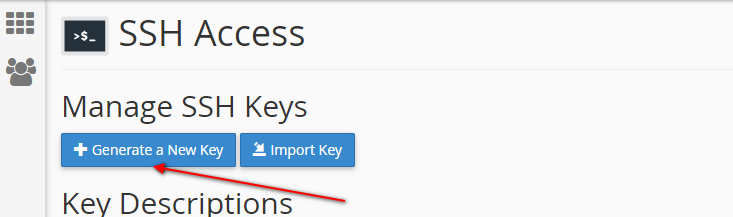
Generate a New Key or Import Key
4. Click the **Generate a New Key** button
5. On the next page, enter the name of the key and the password for the key.
- **Key Name** – you can leave the default value
- **Key Password** – enter the password for the key and confirm it
- **Key Type (RSA or DSA)** – let the default value
- **Key Size (2048 or 4096)** – let the default value 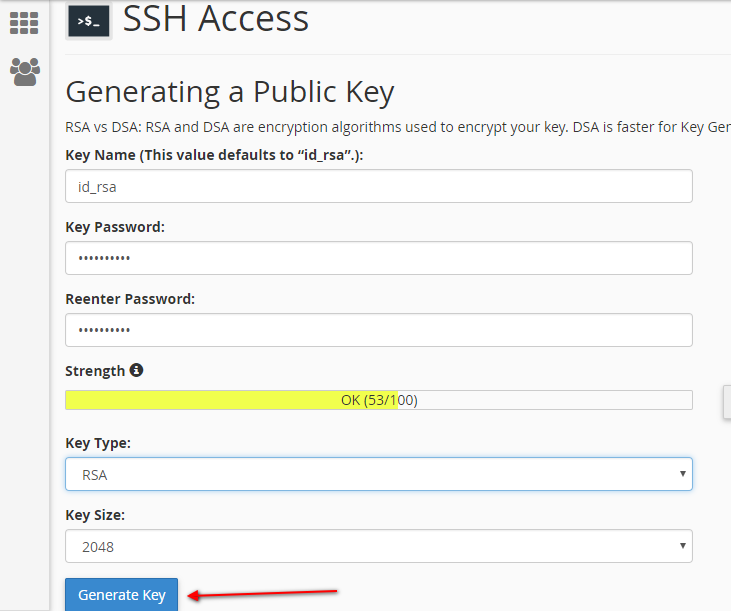
Generate new key
cPanel recommendations:
RSA vs DSA: RSA and DSA are encryption algorithms used to encrypt your key. DSA is faster for Key Generation and Signing and RSA is faster for Verification.
6. Click the **Generate Key** button. You will see a confirmation message: *Key Generation Complete!* with some details: ```
Generating public/private rsa key pair.
Enter passphrase (empty for no passphrase):
Enter same passphrase again:
Your identification has been saved in /home/username/.ssh/id_rsa.
Your public key has been saved in /home/username/.ssh/id_rsa.pub.
The key fingerprint is:
b7:9a:55:59:c1:a7:6a:31:5c:9a:40:50:e9:73:24:a0
```
7. Click the **Go Back** button
8. Now you need to authorize the public key. (the *Authorization Status* is *not authorized*). Click the **Manage** link 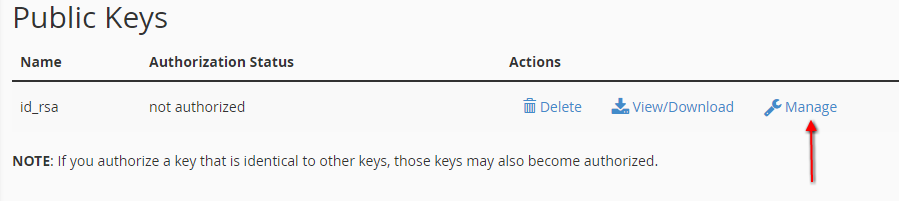
Manage Public keys
9. You will see a message *The key with the name “id\_rsa” is currently “not authorized” for use when connecting to this account.* Click the **Authorize** button. The success message is: *The key “id\_rsa.pub” has been authorized.*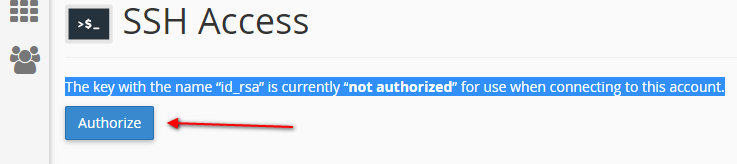
Authorize SSH key
10. Click the **Go Back** button
11. Go to the Private Keys sections and click the **View/Download** link. 
View or Download private SSH key
The key that appears on the page that appears can be saved in several formats:
- If you want to connect to the server via MAC or a LINUX distribution, copy the key from the box under **Open SSH Key *Keyname*** **Open Key** and paste it into a simple text editor (such as Notepad, Notepad ++). The last step is to save the file.
- convert the Private Key to PPK format 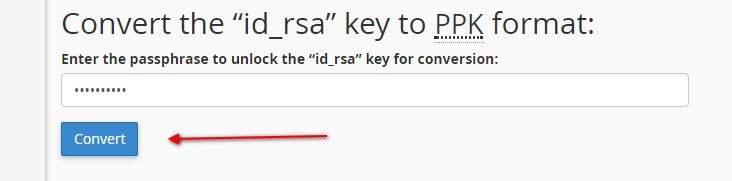
Convert private key to PuTTY PPK format
In case you want to connect to the server with PuTTY, you have to enter the password set for the key and click the **Convert** button.
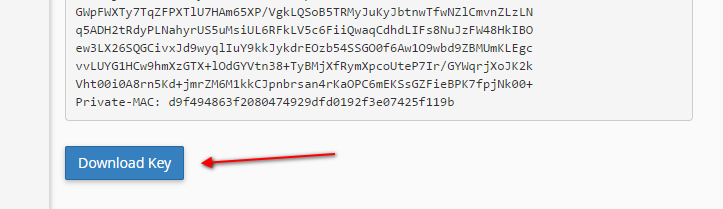
Download converted key
Copy the key from the box under **Private SSH Key *Keyname* Open Key** and paste it into a simple text editor (such as Notepad, Notepad ++). As a final step, specify the folder where you want to save the Private Key and name the key so that its extension is in .ppk format.
# How to Use lsPHP on cPanel Hosting
#### WHAT IS LSPHP?
lsphp – PHP + LSAPI.
#### WHAT IS LSAPI?
LiteSpeed Server Application Programming Interface (LSAPI) is designed specifically for seamless, optimized communication between LiteSpeed Web Server and third party web applications. The lsapi is the fastest and most reliable way to serve PHP pages. It has a low memory footprint and understands PHP directives from .htaccess files.
Works with the PHP versions available in the PHP version option on the cPanel interface.
If you don’t want to use the default PHP version under on your domain name, you need to create a .htaccess file in a particular domain name assigned to a folder (document\_root) will be placed into one of the following lines. After setting recursively, all sub-directories will be applied to the setting.
PHP version 4.4:
```
AddHandler application/x-httpd-lsphp44 .php .php5 .php4 .php3
```
PHP version 5.1:
```
AddHandler application/x-httpd-lsphp51 .php .php5
```
PHP version 5.2:
```
AddHandler application/x-httpd-lsphp52 .php .php5
```
PHP version 5.3:
```
AddHandler application/x-httpd-lsphp53 .php .php5
```
PHP version 5.4:
```
AddHandler application/x-httpd-lsphp54 .php .php5
```
PHP version 5.5:
```
AddHandler application/x-httpd-lsphp55 .php .php5
```
PHP version 5.6:
```
AddHandler application/x-httpd-lsphp56 .php .php5
```
PHP version 7.0:
```
```
AddHandler application/x-httpd-
```lsphp70 .php .php5
```
PHP version 7.1:
```
AddHandler application/x-httpd-lsphp71 .php .php5
```
PHP version 7.2:
```
AddHandler application/x-httpd-lsphp72 .php .php5
```
PHP version 7.3:
```
AddHandler application/x-httpd-lsphp73 .php .php5
```
PHP version 7.4:
```
AddHandler application/x-httpd-lsphp74 .php .php5
```
PHP version 8.0:
```
AddHandler application/x-httpd-lsphp80 .php .php5
```
PHP version 8.1:
```
AddHandler application/x-httpd-lsphp81 .php .php5
```
The module enabled per PHP version is a global setting, but you can change your php.ini settings with a .php.ini file placement. Starting with PHP 5.4 version, you can put a .user.ini file, each of which can override PHP settings for that folder (and its subdirectories).
# How to Use the Redirect Tool in cPanel
This tutorial will how you how to use the **Redirects** tool which will allow you to redirect your domain names.
- 301 or 302 Redirect
- Url to Redirect
- Destination URL
- WWW Redirect options
- Wild Card Redirect
---
1. Login to your cPanel account.
2. Click the **Domains** tab, near the top of the page.
##### 301 OR 302 REDIRECT
From the **add redirect** menu, you will need to choose which type of redirect to use.
- **Permanent 301:** A 301 redirect will update the visitors bookmarks and direct search engines to the new site.
- **Temporary 302:** A 302 redirect will redirect the visitor or search engine, but will not update the bookmark and the search engine will continue to index to the original page.
##### URL TO REDIRECT
1. Choose your domain name you would like to redirect, using the drop-down menu.
2. If you would like to redirect a single page or directory; you can use the text field following the drop-down menu to enter the name of the folder or file.
##### DESTINATION URL
Enter the full URL of the page you will be redirecting to in the **“redirects to ->”** text field.
**Note:** You need to enter the protocol as well, e.g. http://, https:// or ftp://
##### WWW REDIRECT OPTIONS
Select if you will be redirecting **www.** or not.
- **Only redirect with www. –** This option will only redirect visitors that use www. as part of the URL
- **Redirect with or without www. –** This option will redirect all visitors.
- **Do Not Redirect www. –** This option will not redirect visitors that use www. as part of the URL
- **Wild Card Redirect –** Click the **“Wild Card Redirect’** if you would like to redirect to the same file on the new destination.
Click the **“Add”** button to create the redirect.
# How to Create and Edit Files Using cPanel File Manager
You can create a file through FTP or SSH, and you can access the descriptions below through the following links:
- [Creating and editing a file via FTP](https://dotroll.com/en/knowledge-base/books/ftp/page/how-to-create-and-edit-files-via-ftp "Creating and editing a file via FTP")
- [Creating and editing a file via SSH](https://dotroll.com/en/knowledge-base/books/other/page/how-to-create-and-edit-files-via-ssh "Creating and editing a file via SSH")
- #### VIA ONLINE INTERFACE
1. Sign in to [https://admin.dotroll.com](https://admin.dotroll.com/clientarea.php?swcfpc=1 "https://admin.dotroll.com") with your username and password.
2. Then, in the top menu bar, click **Services** / **My Services**.
3. Select the hosting service that is associated with the domain name **Addon domain** or **Alias** and then click on it.
4. On the page that appears, in the **Manage Resource** box on the left, select **File Manager**.
5. After loading, select the document\_root folder for the domain name that you want to create the file for. You can access each folder by clicking on the folder name.
6. Next, click on the **Create new file** button in the middle of the right side of the page.
7. In the popup window that appears, under the **File Name** box, type the name of the file, then click the **Create** button.
- #### VIA CPANEL INTERFACE
1. Log in to the cPanel interface.
2. Find and click on **File Manager** in the **Files** box. The File Manager pane will open on a new tab
3. In the upper right corner, click the **Settings** button.
4. Select the home directory of the affected domain, then select **Show Hidden Files (dotfiles)** and click the **Save** button.
5. Click the **File** button in the upper left
6. Under the **New filename:** label, enter the file name and extension you want to create, and then click **Create New File** button.
1. Log in to the cPanel interface
2. Find and click on **File Manager** in the **Files** box.
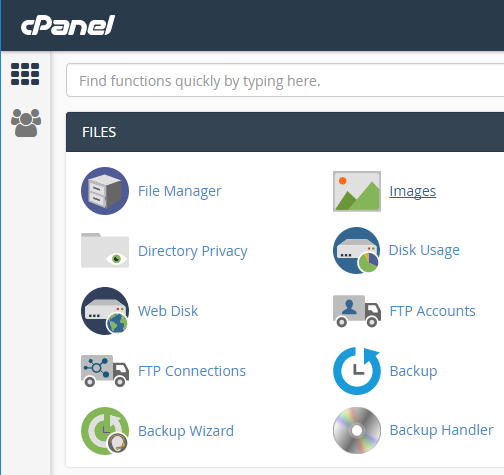
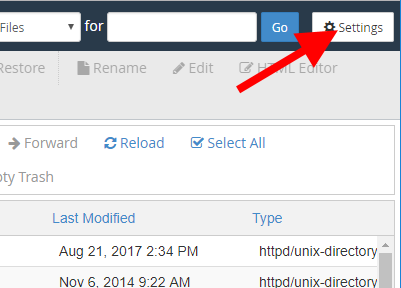
3. In the upper right corner, click the **Settings** button.
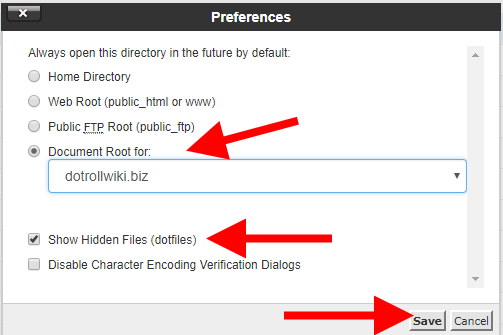
4. Select the home directory of the affected domain, then select **Show Hidden Files (dotfiles)** and click the **Save** button.
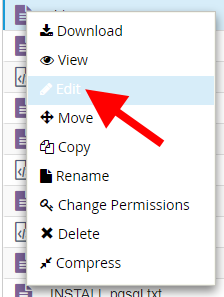
5. Find the document\_root folder for that domain name and include the file you want to edit, right-click and select **Edit**.
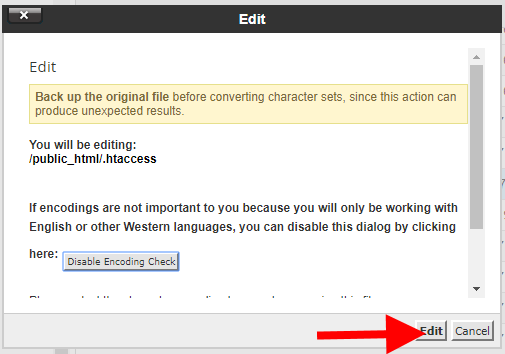
6. Click the **Edit** button in the window that appears.
7. In the editor that opens, make the necessary changes
8. Lastly, save your changes to the word editor by using the **Save Changes** button in the upper right corner.